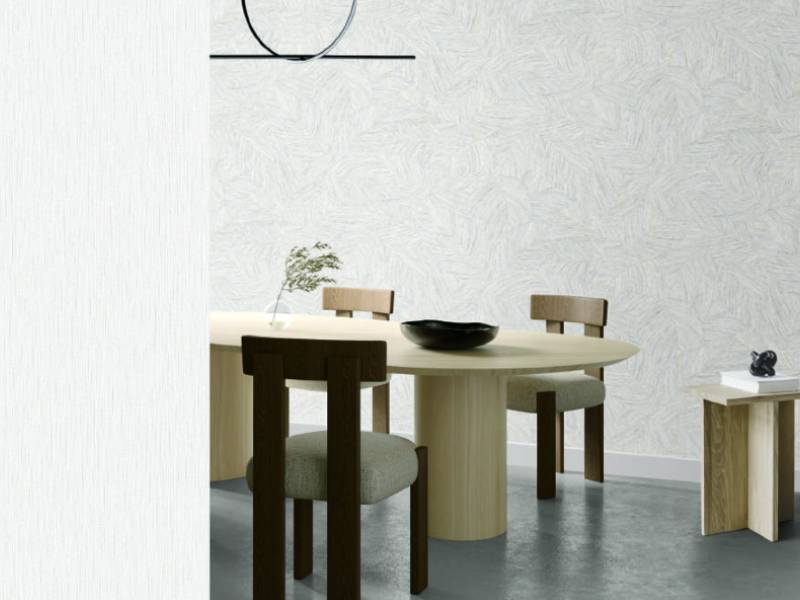
Korea vs Europe Wallpaper Rolls: Sizes, Costs & Waste

Korea vs Europe Wallpaper Rolls: Sizes, Costs & Waste

Two wallpaper designs can look almost identical on a screen and land at very different prices once you order them. The pattern is rarely the reason. More often it comes down to where the roll was made and how much wall a single roll covers.

Roll format is one of those details nobody explains until you are standing at a counter deciding between two samples. Once it clicks, quoting a room stops feeling like guesswork.

Korea Rolls And Europe Rolls, Side By Side

Our range is sourced from design houses across Europe, Korea, Japan and the USA, and the two formats you will meet most often are Korea rolls and Europe rolls. Europe wallpaper has traditionally come in a narrower, shorter roll, while Korea rolls are both wider and considerably longer.

Korea rolls typically run around 1.06m wide by 15.6m long. Europe rolls typically run around 0.53m wide by 10m long, though some newer European lines are now produced at 1.06m width. Treat these as the usual formats and confirm the exact figures for the specific design you like, because they vary by collection and by mill.

What That Means For Coverage

The arithmetic is straightforward once you have the numbers in front of you. A Korea roll at 1.06m by 15.6m gives roughly 16.5 square metres of material before any pattern matching. A Europe roll at 0.53m by 10m gives around 5.3 square metres. Neither format is better value on its own, since the price per roll reflects the difference. Comparing roll prices without checking the size is simply a fast way to mislead yourself.

Pattern Repeat Is The Hidden Cost

Coverage on paper and coverage on your wall are two different figures, and the gap between them is pattern repeat. Every time a design has to line up across a seam, some material ends up in the bin.

A plain texture or a fine linen weave has almost no repeat, so waste stays low and the theoretical coverage is close to what you actually get. A large damask or a bold botanical with a long vertical repeat can lose a meaningful slice of every drop before it reaches the wall.

Narrower rolls also mean more seams across the same wall, and more seams mean more matching. This is where Europe rolls at the traditional 0.53m width can quietly need more material for a patterned design than the square-metre maths suggests. Our installers account for this when quoting, though knowing why the number came out higher takes the sting out of it.

Which Format Suits Which Job

Wide Korea rolls tend to suit large, uninterrupted walls: a living room feature wall, a long hallway, the stretch behind a headboard. Fewer seams gives a cleaner run and usually trims some labour time off the installation.

Europe rolls come into their own for design reasons more than practical ones. A great deal of the most interesting European artistry, including hand-drawn florals and heritage prints, is produced in that format, and the narrower width is easier to handle in tight spaces like a small study or a stairwell landing. Korean wallpaper is strongly represented at the softer, more minimal end of the range, so the decision often comes down to style first and format second.

Backing Types Affect Installation

Roll size is only half the story. Backing determines how a design goes up and how it comes down years later. Paper backing is the traditional option and is usually pasted on the paper itself, which means a soaking time before anything reaches the wall.

Non-woven backing is dimensionally stable, can be hung by pasting the wall directly, and strips off far more cleanly at the end of its life. Fabric backing is used for heavier, more textured wallcoverings and generally calls for a more experienced hand on site.

Ask which backing a design uses before ordering. It changes the installation method, the time our team spends on site, and what happens to your plaster when you redecorate in eight years, and none of that shows up in a price per roll.

A Quick Comparison

Pulling the practical differences together:

Format Typical roll size Best suited to Watch out for
Korea rolls Around 1.06m x 15.6m Large feature walls, hallways, subtle textures Wide rolls are heavier to handle in tight corners
Europe rolls Around 0.53m x 10m, some newer lines at 1.06m Detailed prints, heritage patterns, smaller rooms More seams, and pattern repeat adds waste

Before You Order

Measure the wall height and width, note any windows and doors, and take a photo on your phone. Our online calculator will get you to a ballpark roll count. Choosing the design is usually the harder part, and the ultimate wallpaper design guide for Singapore homes walks through what suits a local space.

Prices move with collection, origin, and exchange rates, so treat any figure you find online as indicative and ask for a quotation on the specific design. Installation is handled by our own in-house team, and our wallpaper carries up to a two-year workmanship warranty covering peeling and bubbling, with the full two years applying when a water-based sealer is used.

Getting The Order Right First Time

Roll format is hardly the glamorous part of choosing a wall covering, though it is the part that decides whether you order enough and what the final bill looks like. A little clarity at the start saves a second delivery and a pushed-back installation date.

Wall condition is the other thing to raise early. Old adhesive residue, flaking paint, or a fresh skim coat that has not fully cured will all affect the finish and the timeline, and finding that out before the rolls are cut is considerably cheaper than finding out afterwards.

Bring your measurements to our Singapore flagship gallery at Vertex on Ubi Ave 3, or to the boutique showroom in the east, and we will work out exactly what your wall needs. Our team in Petaling Jaya can do the same for projects in Malaysia.

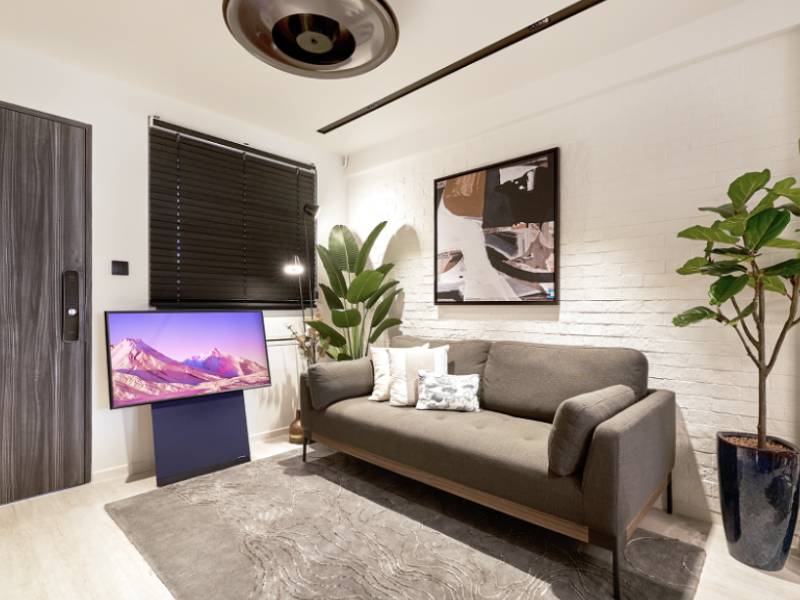
Interior Film Sticker: Refresh Cabinets Without Hacking

Interior Film Sticker: Refresh Cabinets Without Hacking

Kitchen cabinets have a way of ageing faster than the rest of a flat. The layout still works, the carcasses are solid, and the doors are the only thing letting the room down. Replacing them means a contractor, a week of dust, and a bill that feels wildly out of proportion to the actual problem.

There is a middle path that gets far less attention than it deserves. Architectural film can be wrapped over surfaces you already own, changing colour and texture without pulling anything out.

What Architectural Film Is

An interior film sticker is a commercial-grade self-adhesive vinyl designed to be applied over an existing surface. It sits somewhere between wallpaper and laminate: thin enough to follow a curve, tough enough to take daily handling on a cabinet door.

The range covers solid colours in both rich and pastel tones, matt finishes, natural looks such as wood grains and textiles, and trend-led designs including terrazzo and marble. Bespoke prints can be produced where nothing in the stock range does the job.

Thickness is where people get caught out, usually pleasantly. Film is far slimmer than a replacement door skin, so it follows the existing profile closely and leaves handles, hinges and clearances exactly where they were. Nothing needs re-drilling and nothing suddenly stops closing properly.

The Surfaces It Will Stick To

This is where film pulls decisively ahead of wallpaper. It bonds to glass, tiles, veneers, laminates and MDF, which covers most of the surfaces in a flat that wallpaper will simply not hold onto. Walls, ceilings, doors, built-in furniture and curved profiles are all fair game, and that opens up jobs like wrapping a tiled kitchen backsplash or a glass partition that would otherwise need replacing outright.

Why Renters And Light Renovators Keep Coming Back To It

Disruption is the real cost of most renovation work. Hacking tiles or stripping out carpentry brings noise, debris disposal and a permit conversation, and HDB flat owners have renovation guidelines to work through before any of it starts.

Film sidesteps most of that. Application is self-adhesive, so there is very little downtime, and the noise and dust involved are minimal. A single room can often be turned around fast enough that nobody needs to move out for the week.

For tenants the appeal is obvious. A rented flat with dated cabinet fronts can be updated without touching the underlying carpentry, which keeps the conversation with a landlord short and simple. Do check your tenancy agreement first, since terms vary and some owners want to be asked.

There is a resale angle as well. A kitchen that photographs well makes a real difference when a flat goes on the market, and resurfacing the fronts costs a fraction of new carpentry that a buyer may well tear out anyway.

Where It Earns Its Place

A handful of jobs where film tends to be the sensible answer:

  • Kitchen cabinet doors and drawer fronts that have lost their finish
  • Wardrobe fronts, where a colour change quietly transforms a bedroom
  • Interior doors that no longer match an updated palette
  • Glass partitions in an office needing privacy or a bit of branding
  • Tiled walls in a bathroom or utility area where hacking is off the table
  • Reception counters and shopfront fixtures during a fast commercial refresh

Ceilings deserve a mention too, since they are the surface everyone forgets and easily the hardest thing to repaint neatly in a home somebody is still living in.

How It Holds Up

Durability decides whether this is a genuine solution or a stopgap. The films we supply carry a special surface coating and are rated as resistant to moisture, pollutants, bacteria and fungus, with flame retardancy certification and ASTM E 84, heavy metal and antimicrobial activity testing behind them.

On a high-traffic surface like a kitchen door, that coating does the heavy lifting against fingerprints and cleaning products. Treat it the way you would treat a good laminate: wipe it down, skip the abrasive scourers, and it will keep its look for years.

Lifespan depends mostly on where it goes. A wardrobe front handled twice a day will comfortably outlast a cabinet door sitting beside a hob, and edges are always the first place wear shows, which is why trimming and sealing at the corners is the part to leave to a professional.

Film, Wallpaper Or Paint?

The three get compared constantly, though they solve slightly different problems. Paint is cheapest per square metre and performs best on large, flat, well-prepared walls. Wallpaper for walls gives you pattern, depth and a far wider design range across a whole room.

Film comes into its own when the surface is not a plain wall at all. Cabinet doors, tiles, glass and curved joinery are exactly where the other two struggle or fail outright, and that narrows the decision considerably.

Cost comparisons depend heavily on surface area and the condition of whatever sits underneath, and the longer-term maths of which one saves more money when weighing paint against wallpaper applies here too. Film usually lands between the two, with most of the saving coming from what you avoid replacing.

One caveat before you get excited. Film needs a sound surface underneath it. Swollen MDF, flaking laminate or a door that has taken on water will telegraph straight through, and no amount of careful application will hide it. Our installers will tell you honestly when a surface needs replacing instead of wrapping.

Before You Rip Anything Out

Plenty of renovation budgets get spent replacing things that only ever needed resurfacing. If the bones of your kitchen, wardrobe or office fit-out are sound and the finish is the problem, wrapping is the quieter and cheaper answer.

Come and handle the samples at our Singapore flagship gallery at Vertex on Ubi Ave 3, or send our team a few photos of the surfaces you have in mind. We are always glad to give you a view before you commit to anything.

Brick Wallpaper Living Room Ideas For A Warmer Look

Brick Wallpaper Living Room Ideas For A Warmer Look

Exposed brick has a hold on people that few finishes can match. It suggests warmth, age and a building with some history behind it, which is a tricky thing to conjure in a flat handed over three years ago with perfectly smooth plaster walls.

Wallpaper is the usual workaround, and it can be genuinely convincing or painfully fake depending on a handful of choices made at the sample stage. The difference between the two is smaller than most people expect.

Why Brick Reads Warm

Brick works in a living room because it introduces irregularity. Real brick varies in tone from one unit to the next, the mortar lines wander slightly, and the surface catches light unevenly. That visual noise is what makes a room feel lived in. Flat paint gives you a colour, while a considered brick wallpaper living room scheme gives you a surface with depth, and the difference becomes obvious the moment afternoon light rakes across it.

There is a practical bonus as well. A busy, variegated surface hides scuffs and marks far better than flat paint, which makes it a forgiving choice for a wall that sits behind a sofa or takes the occasional knock from a vacuum cleaner.

Getting The Tone Right For Local Light

The most common misstep is choosing a brick tone that fights Singapore’s light. Bright orange-red brick, the sort that looks handsome on an overcast London terrace, can turn strident under strong tropical sun and leave a living room feeling hot before anyone switches on a lamp.

Softer options travel much better. Whitewashed and limewashed brick, greyed-out industrial brick and pale sandy tones all hold their character through the middle of the day without dominating. Deeper charcoal brick can look superb in a room with limited direct sun, especially alongside warm lighting.

Think about the rest of the room too. Brick sits beautifully against timber, leather, rattan and plants. Against high-gloss lacquer and chrome it can look like a costume, so if your living room leans contemporary and polished, a subtler concrete or plaster effect may serve you better.

Scale Is What Gives The Illusion Away

Nothing breaks the effect faster than bricks printed at the wrong size. Check the printed brick dimensions against a real one before you commit, since most common formats sit around 215mm long and 65mm tall, and a design printed noticeably under that will read as slightly off even to someone who could not explain why.

Repeat is the other giveaway. A short repeat means you will start spotting the same chipped corner appearing every metre or so, and once seen it cannot be unseen. Look for designs with a long vertical repeat or a randomised layout, and always judge scale on a full-size sample held against the wall instead of on a screen.

Where To Put It

One wall is almost always the right answer in a living room. A few placements that consistently work:

  • Behind the television, where brick visually absorbs cables and clutter
  • Behind a sofa, as a backdrop with art layered over the top
  • A dining nook inside an open-plan living area, to define the zone
  • The wall around a feature shelf or a bar unit
  • A balcony-facing interior wall, where the texture picks up side light beautifully

Wallpaper, Panel Or Paint?

Brick-effect wallpaper is the fastest and most forgiving of the three, and it comes off cleanly when you change your mind in five years. It is also the only option that gives you genuinely photographic detail at a sensible price, since the variation is printed from real brick.

If you want physical relief you can run a hand over, a texture paint finish applied by hand can build a plaster-over-brick effect with real depth. That is a bigger commitment and not something you undo in an afternoon, so it suits people who are certain about the look.

Brick slips and cladding panels make up the third route, and the most literal one, giving you genuine relief and real shadow. They cost more and eat a little floor depth, which makes them better suited to larger rooms where a centimetre or two off the wall line goes unnoticed.

Making It Look Deliberate

The rooms that pull this off share one habit: they treat the brick wall as a background and never as the main event. Furniture stays simple, the palette around it stays restrained, and the lighting does most of the work.

Wall-washing light from above, or a floor lamp angled across the surface, will exaggerate the texture and sell the effect completely. Flat overhead lighting does the opposite, flattening everything back into a printed image and undoing the whole exercise.

Layering helps as well. Using wallpaper to add dimension works best when the wall forms part of a wider scheme, with a rug, some timber and soft textiles all pulling in the same direction. One textured wall in an otherwise flat room can end up looking stranded.

Mind the edges while you are at it. A brick wall that stops dead at an outside corner gives the trick away instantly, so plan the surface to finish at a natural break: a door frame, a ceiling bulkhead, or a return into the next room.

A Wall With A Bit Of History

Faking age convincingly comes down to restraint. Pick a tone that suits your light, check the scale against something real, keep the surrounding room quiet, and light it properly. Do those four things and most visitors will walk up and touch the wall to check.

One last thing: order a little extra. Textured designs of this kind are unforgiving when it comes to patching, and a spare drop in the store cupboard saves a great deal of grief if a wall takes damage later on.

Our Singapore flagship gallery at Vertex on Ubi Ave 3 holds full-size samples you can carry over to a window and judge for yourself, which beats any screen. Drop in whenever suits you and our team will happily narrow the options down with you.

Bamboo Wall Panels: A Warm Alternative To Feature Walls

Bamboo Wall Panels: A Warm Alternative To Feature Walls

Feature walls in Singapore homes have a habit of following the same script. Paint one wall a shade darker, hang a few frames, call it done. The result is perfectly fine, though it rarely delivers the warmth people are actually chasing when they start saving ideas at midnight.

Natural materials have stepped in to fill that gap, and bamboo has quietly become one of the more interesting options on the market. It brings grain, texture and a softness that painted plaster cannot manage. Here is what these panels involve and where they tend to earn their place.

What A Bamboo Panel Brings To A Room

A bamboo wall panel is a board made from pressed bamboo fibre, finished so it can be fixed straight onto a wall as a decorative surface. Wallhub’s Bambos range is built around that idea, using a rapidly renewable material in place of traditional wood. Surface options run from smooth and matte through to textured and anti-fingerprint finishes, so the look can lean minimal or a little more tactile depending on the room.

Where bamboo pulls ahead of a painted accent wall is depth. Light catches the ridges and grain differently through the day, giving the surface a quiet movement that flat colour never has. That soft, slightly imperfect quality is part of why the wabi-sabi aesthetic is gaining fans in local homes, and bamboo slots neatly into that way of decorating.

Installation Without The Hacking

One of the practical draws is how the panels go up. They can be applied directly onto raw or uneven walls, including brick and tiled surfaces, with no hacking or plastering needed first. Jointing is handled either with interlocking joints for a seamless run, or with aluminium profiles for a more defined panelled look, and LED strips can be built into those profiles if you want the wall to glow softly after dark. For anyone trying to avoid a week of dust and debris disposal, that alone can decide the material.

How Bamboo Handles The Local Climate

Humidity is the first question most people ask about any natural material here, and reasonably so. Timber can swell, warp, or open up at the joints when the air stays damp for months on end.

Bambos panels are rated as 100% waterproof, anti-mould and anti-termite, with a Fire Retardant Grade B1 rating and a scratch-resistant, non-toxic surface. They are also built to avoid the contraction and expansion that solid timber goes through, which is why fewer joints are needed across a long wall.

That combination makes them a sensible choice for spaces where solid wood would need more looking after, including corridors near wet areas and commercial fit-outs that see heavy foot traffic. Curved walls are manageable too, since the panels can be moulded around a gentle radius without the fight you would get from a rigid board.

The Sustainability Angle

Bamboo’s green credentials get mentioned constantly, and there is real substance behind them. Bamboo is a grass, not a tree, so it regrows from the same root system after harvesting instead of needing replanting. Research from the International Bamboo and Rattan Organisation puts living bamboo’s carbon storage at roughly 100 to 400 tonnes per hectare, sitting in the same range as tree plantations.

The panels also use low VOC adhesives and finishes, which is the part that actually affects the air inside your flat. If you are weighing up materials for a nursery or a bedroom where someone is sensitive to off-gassing, that detail deserves a proper place in the decision.

Where They Work Well

Bamboo panelling is flexible, though it does not suit every wall in a home. A few placements where it consistently earns its keep:

  • Living room feature walls, particularly behind a sofa or a wall-mounted television
  • Bedroom headboard walls, where the texture softens the whole room
  • Hallways that would otherwise read as blank connecting space
  • Reception areas and meeting rooms in commercial fit-outs
  • Curved or awkward wall sections that wallpaper struggles to sit flat against
  • Interior walls next to a balcony, which catch both humidity and beautiful side light

Wet areas deserve a closer look before you commit. The panels themselves are rated waterproof, though how a wall performs overall still depends on what sits behind it and how the edges are detailed, so have our team assess the specific wall first.

Full-height panelling across every wall in a compact flat can tip a room from warm into heavy. One or two surfaces usually does far more for a space than four.

Bamboo Or Fluted?

The obvious comparison is with fluted panelling, since both deliver vertical texture. A fluted wood panel from the W. Fluted Panels range uses New Zealand solid pine with a German vinyl film coating, or engineered wood slats with a polyester fibre acoustic felt backing in the acoustic version. The ridges are sharper and the shadow lines more pronounced.

Bamboo reads softer and warmer up close, with a finer grain and gentler definition. Neither wins outright, and the choice usually comes down to how much drama you want a single wall to create. If sound is part of the brief, for a home office or a media room, the acoustic fluted option has a clear edge thanks to the felt layer behind the slats. For pure warmth and a natural surface underhand, bamboo is the one people keep reaching out to touch in the showroom.

A Warmer Way To Finish A Wall

Choosing a wall finish comes down to how you want a room to feel once the furniture is in and the lights are low. Natural texture does something for a space that colour on its own cannot, and it does it without asking you to redecorate everything around it.

Bamboo panelling is also easier to live with than it sounds. No annual oiling, no sanding back, and no seasonal movement to plan around, which suits anyone who wants the look of timber without the upkeep usually attached to it.

Come and run your hand over the finishes at our Singapore flagship gallery at Vertex on Ubi Ave 3, or at the Malaysia showroom in Petaling Jaya. Our team will happily talk you through what suits your walls, your budget and the way you actually use the room.

Nursery Wallpaper Ideas For Calm, Sleep-Friendly Rooms

Nursery Wallpaper Ideas For Calm, Sleep-Friendly Rooms

Every new parent goes through the same phase. Somewhere around the second trimester the spare room stops being a spare room and starts being a project, and a good chunk of that project happens on a phone at two in the morning.

Walls are usually where the vision lands first. They are the largest surface in the room and the easiest thing to change before the cot arrives, which gives them more influence over a nursery than over almost any other space in a home.

Start With How The Room Will Be Used

Choosing nursery wallpaper works best when you picture the room at three in the morning, not in a daylight photograph. A nursery is a sleeping room first and a playing room second, at least for the first couple of years, and the walls should back up the settling part of that job. Our Nordic Nursery collection leans deliberately in this direction, with whales, clouds, hot air balloons and simple geometric motifs kept in gentle, subdued tones and a gender-neutral palette.

Orientation feeds into the decision too. A west-facing nursery takes strong afternoon sun and will make any colour look lighter and hotter than it did on the sample card, while a north-facing room stays softer all day and can carry a slightly deeper tone without closing in on itself.

Colour Does The Heavy Lifting

Soft, low-contrast palettes are the standard advice for a good reason. Babies are still developing visual processing, and a wall of saturated, high-contrast pattern gives a tired brain plenty to fixate on at precisely the moment you want it switching off.

Warm neutrals, muted sage, dusty blue and soft clay tones all perform well in Singapore’s light, which runs bright and slightly cool through the middle of the day. These shades hold their character without bouncing glare around a small room, and they photograph beautifully as a bonus.

None of this means the room has to be beige. A deeper accent wall behind the cot, kept muted, can make a space feel enclosed and restful, which is particularly useful in a nursery carved out of a three-room flat.

Pattern Scale And Placement

Where the pattern sits changes the feel of a room as much as the pattern itself. The wall directly in a baby’s line of sight from the cot is the one to keep quietest. The wall behind the cot is where you can afford more interest, because nobody lying in it is looking at that one.

Scale follows the same logic. Small, repeating motifs read as texture from across a room and stay calm, while large-scale murals make a much stronger statement and suit a play corner or the wall a visitor sees on entering. Mixing both in one small room usually ends up busier than anyone intended.

Practical Checks Before You Commit

A nursery takes more wear than people expect, and a few decisions made early will save you repainting later:

  • Choose a wipeable surface for the lower half of any wall a toddler can reach
  • Ask about the adhesives and inks before ordering if low VOC content is a priority for you
  • Plan around the cot, wardrobe and changing table so the best part of a design is not hidden behind furniture
  • Think five years ahead, since a room styled tightly around a newborn dates surprisingly fast

Light, Sleep And The Wall Behind The Cot

Infant sleep guidance focuses mostly on routine and environment, and HealthHub’s advice on baby sleep covers the fundamentals of a calm, consistent setting. Wall treatment is a small part of that picture, though it does change how a room reads once the lights go down.

Matte and lightly textured finishes absorb light instead of reflecting it, which stops a night light bouncing off the wall and into a cot. Glossy and metallic finishes can create bright hot spots you only notice at two in the morning, by which point the paper is already up.

Older children’s rooms follow much the same principle, and several bedroom wallpaper inspirations that suit adult rooms carry over neatly once a toddler graduates to a proper bed.

Blackout blinds will always do more for daytime naps than any wall finish can, so if the room is bright, budget for those first and let the walls handle mood while the window handles light.

Growing With The Room

The most common regret has less to do with colour and more to do with commitment. A full room of cartoon characters looks charming for eighteen months, then becomes a redecorating job at exactly the point in life when you have the least free time available.

A calmer base with one changeable element ages far better. Keep the walls soft, put the personality into bedding, art and a single feature panel, and the room can follow a child from cot to first desk. The wider kids room wallpaper range gives you plenty of scope for that second stage when it arrives. Properly installed, quality wallpaper stays looking good for somewhere between seven and ten years, which comfortably outlasts the nursery phase.

A Room That Settles Everyone

Getting a baby’s room right has less to do with decorating and more to do with building a space where everyone in it can wind down. Soft colour, thoughtful placement and finishes that behave under low light will do more for that than any single clever design choice.

Take your time with samples. Tape a few options to the wall and look at them at bedtime as well as at breakfast, because the two moments tell you completely different things about the same design.

If you would like to see the options in person, our Singapore flagship gallery at Vertex on Ubi Ave 3 has samples you can hold against your own fabric swatches. Bring your measurements and our team will help you narrow things down without the two in the morning scrolling.