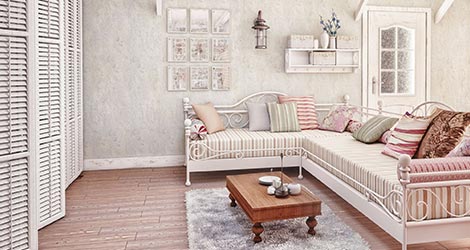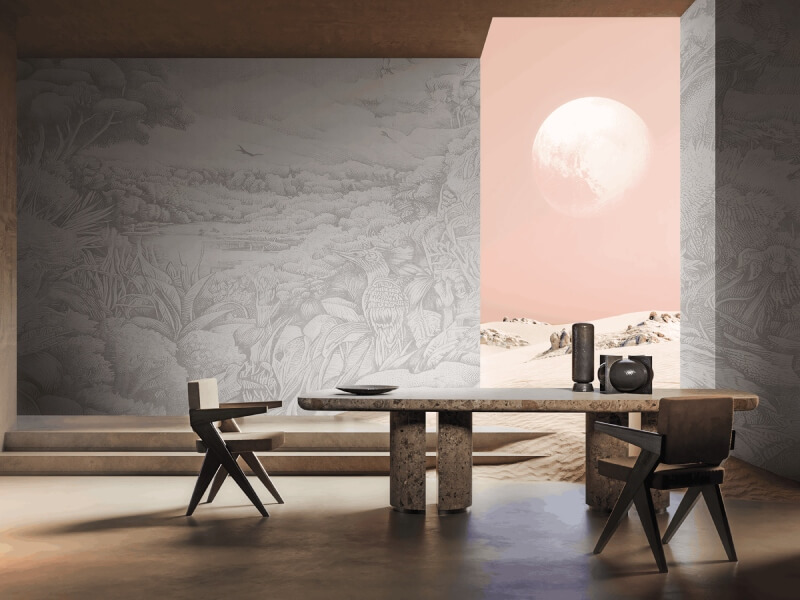
Homeowners planning to refresh their interiors often assume they must choose between wallpaper or paint when updating their walls. For years, the common rule was to pick one and commit to it. However, modern interior design trends are increasingly proving that you don’t actually have to make that choice anymore.
Today, more homeowners and designers are experimenting with both finishes in the same space. When one combines wallpaper and paint, they can craft more striking accent walls, add subtle texture, and create interiors that feel thoughtfully layered rather than flat or predictable. When done well, the result is a space that feels cohesive, polished, and uniquely personal.
Of course, mixing two different wall treatments can feel intimidating at first. Without careful planning, the room may end up looking cluttered or mismatched. The good news is that with a few design principles in mind, it’s surprisingly easy to blend wallpaper and paint in a way that feels harmonious and intentional. In this guide, we’ll explore why this design approach works so well and share creative techniques to combine wallpaper and paint without overwhelming your space.
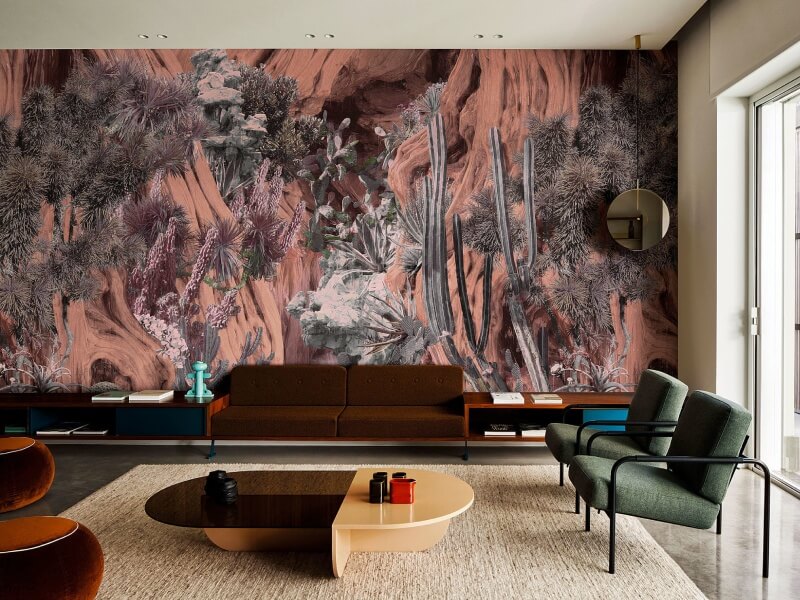
Why Combine Wallpapers and Paint in Interior Décor?
At its simplest, the answer is because the results can look stunning when executed thoughtfully. Mixing wallpaper and paint introduces visual variety while allowing you to highlight architectural features or create focal points within a room. Wallpaper brings pattern, texture, and personality to a space. Paint, meanwhile, offers flexibility and a wide range of finishes that help balance more detailed surfaces. Together, they create a layered design that feels dynamic without being chaotic.
Another major reason designers favour this technique is practicality. High-quality wallpaper can be expensive, especially when used on every wall in a room. Pairing wallpaper with painted surfaces allows homeowners to enjoy the richness of patterned walls while keeping renovation costs manageable. This combination also adds dimension. Imagine a tactile, embossed wallpaper paired with a smooth matte wall finish. The contrast between textures draws the eye and makes the room feel more visually engaging. This effect works particularly well in modern, Scandinavian, and contemporary interiors.
To maintain cohesion, many designers rely on colour harmony. One approach is to choose shades from the same colour family. For instance, a wallpaper featuring dusty blues and soft greys could be paired with a coordinating blue-grey paint. Another strategy is to create contrast by choosing colours opposite each other on the colour wheel, which can energise the room without feeling overwhelming.
Paint finishes can further enhance the look. Matte or mineral finishes such as limewash paint can soften the transition between surfaces and introduce subtle texture that complements patterned wallpaper. Lastly, the combination offers flexibility for future updates. Repainting walls is relatively simple compared to replacing wallpaper. If your tastes evolve over time, you can refresh the painted portions of the room while keeping the wallpaper as a design anchor.
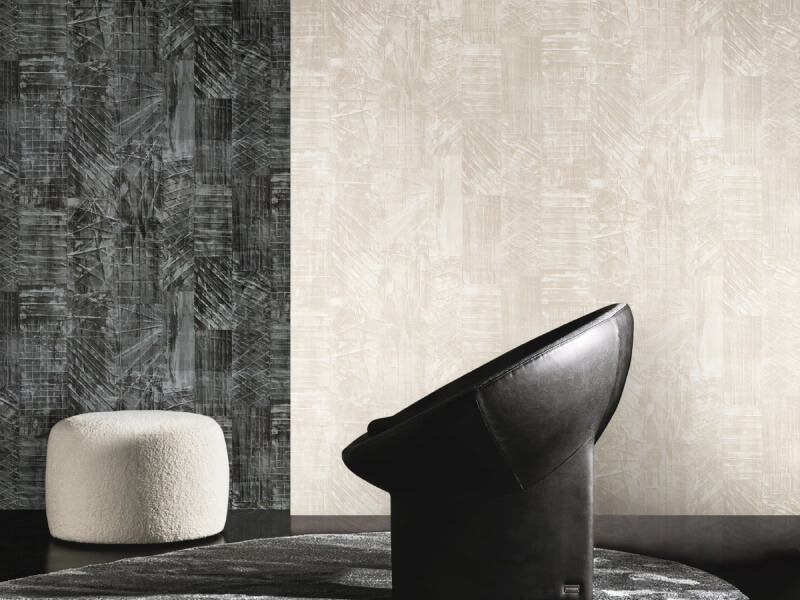
How to Pick a Good Paint Colour and Wallpaper Pairing
Successfully combining wallpaper and paint largely depends on selecting colours and patterns that work well together. These tips can help simplify the process.
1. Pick Your Wallpaper First
Wallpaper usually contains multiple design elements—patterns, textures, and several colours. Because of this complexity, it’s far easier to choose a paint shade after you’ve selected your wallpaper. Once you find a wallpaper design you love, study its colour palette carefully. Many wallpapers include a background colour alongside accent tones. Pulling one of these shades into the surrounding paint creates an effortless sense of harmony.
For example, if your wallpaper features cream florals on a muted green background, using that same soft green as your paint colour helps tie the room together.
2. Always Buy Samples
Even if colours appear perfect online or in-store, they may look completely different in your home’s lighting. Sunlight, artificial lighting, and even the colour of nearby furniture can influence how shades appear.
Purchase small wallpaper samples and paint swatches before committing. Tape the samples to the wall and observe them at different times of the day. This simple step prevents costly mistakes and ensures the colours truly complement one another.
3. Consider Pattern Scale
Not all wallpaper patterns behave the same way in a room. Large, dramatic prints tend to dominate a space, while smaller patterns create subtle texture.
If you’ve chosen a bold wallpaper design, it’s best to pair it with a calm, understated paint colour so the room doesn’t feel overwhelming. On the other hand, delicate patterns often benefit from slightly richer paint tones to give the room visual balance.
4. Pay Attention to Undertones
Two colours might appear similar but still clash if their undertones differ. For instance, a grey paint with warm beige undertones may not pair well with a cool-toned blue wallpaper.
To avoid this issue, compare paint swatches directly with the wallpaper sample. Look for shared undertones, either warm or cool, to maintain a cohesive look throughout the room.
Popular Ways to Mix and Match Wallpaper and Paint
Once you’ve selected your colours, the next step is deciding how to arrange the two finishes within the space. These design approaches are among the most popular for achieving a balanced result.
1. Wallpaper Accent Wall with Painted Walls
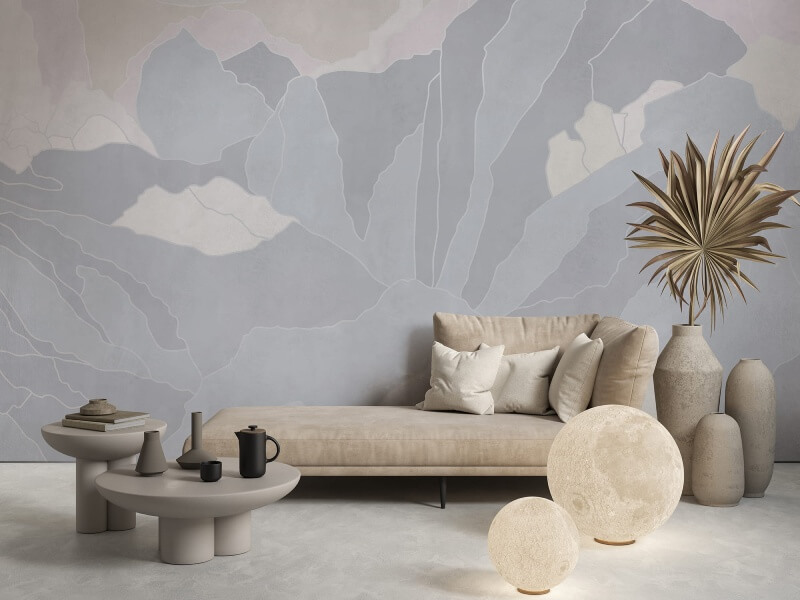
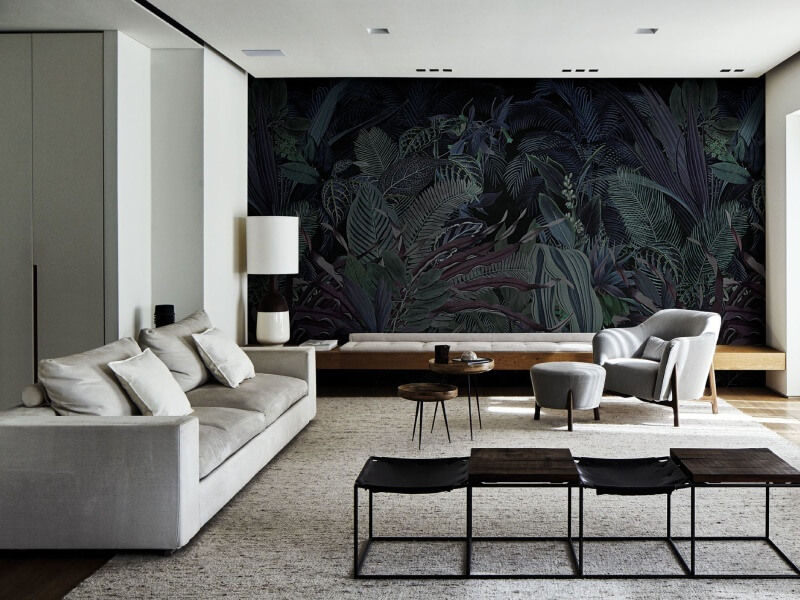
One of the simplest and most widely used techniques is creating a wallpaper accent wall. This involves applying wallpaper to a single focal wall while painting the remaining walls in a coordinating shade. The wallpaper draws attention and acts as the centrepiece of the room, while the painted walls provide visual breathing room.
Bedrooms often place the accent wall behind the bed, while living rooms might highlight the wall behind a sofa or entertainment unit. Because only one wall is covered in wallpaper, this approach keeps the room from feeling visually crowded.
2. Half-and-Half Walls
Another stylish option is splitting the wall horizontally between wallpaper and paint. This design resembles traditional wainscoting but with a contemporary twist.
In most cases, wallpaper is applied to the lower half of the wall, while paint covers the upper portion. This arrangement allows you to showcase bold patterns without overwhelming the space. Choosing the right height for the transition line is important. Many designers place the dividing point roughly halfway up the wall or slightly higher, depending on ceiling height and furniture placement.
The lower wallpaper section can help anchor furniture pieces like beds, sideboards, or sofas, while the painted section keeps the room feeling light and open.
3. Create an Ombre Effect
An ombre wall gradually shifts from darker shades to lighter ones, creating a dramatic yet fluid colour transition. Combining wallpaper and paint makes this effect easier to achieve. Start by selecting two or three colours that blend naturally together. Wallpaper featuring gradient tones or abstract patterns works particularly well for this concept.
Once the wallpaper is installed, you can extend the gradient using paint. Begin with the darkest shade near the top of the wall and gradually introduce lighter tones as you move downward. Feather the edges between colours so the transitions appear soft rather than abrupt. This technique works beautifully in creative spaces, bedrooms, or feature walls where you want to make a bold statement.
4. Monochrome Pairing
For a calmer and more refined look, consider using wallpaper and paint within the same colour family. This monochrome approach creates subtle variation without introducing competing hues. For example, a navy wallpaper could be paired with softer sky-blue paint, or a sage patterned wallpaper could sit alongside pale green walls.
Because the colours are closely related, the room feels cohesive and relaxing. The wallpaper provides interest through pattern, while the paint keeps the overall aesthetic balanced. Minimalist interiors often use this method to add dimension without disrupting a serene atmosphere.
5. Painting Designs Over Wallpaper
If you enjoy creative projects, painting over wallpaper can produce truly unique accent walls. Textured or embossed wallpaper works especially well for this technique because raised patterns catch light and shadow once painted. Damask, geometric, or floral textures are excellent candidates.
Before painting, apply a high-quality primer to ensure proper adhesion. Once dry, use painter’s tape to protect edges or sections you want to keep untouched. Then, carefully paint over the wallpaper using brushes or small rollers, following the raised patterns where possible. A contrasting paint colour will highlight the design details, while a similar shade will create a more subtle effect.
With patience and attention to detail, this method can transform ordinary wallpaper into customised wall art.
A Simple Trick for Seamless Transitions
For a more designer-inspired finish, consider extending the wallpaper slightly onto adjacent walls, usually around 18 to 24 inches. The remaining wall space can then be painted in a coordinating colour.
This small overlap creates a softer visual transition between surfaces and gives the impression that the wallpaper extends further through the room. It’s a clever way to add visual depth while still keeping costs manageable. Another advantage of this technique is that it guides the viewer’s eye around the room, making the overall design feel intentional rather than segmented.
Conclusion
Mixing wallpaper and paint opens up exciting possibilities for personalising your home’s interior. Instead of viewing the two materials as competing options, think of them as complementary tools that work together to create balance, texture, and visual interest. Regardless of how you want to go about it, the key lies in thoughtful colour selection and strategic placement.
When it’s time to apply everything, remember that order matters. It’s usually best to paint the walls first and install wallpaper afterwards. Painting first makes the process cleaner and allows you to easily correct any mistakes before the wallpaper goes up. If the wallpaper doesn’t reach the ceiling or floor, the painted surface naturally frames it, helping the feature wall stand out even more. With a little experimentation and planning, you can discover the perfect balance between pattern and colour, resulting in a home that feels stylish, welcoming, and distinctly your own.